
Possession of Dangerous Drug Attorney
If you are facing a charge for possession of a “dangerous drug” in North Texas, you might be confused by the terminology. In Texas, there is a legal distinction between a controlled substance (like cocaine or THC) and a dangerous drug.
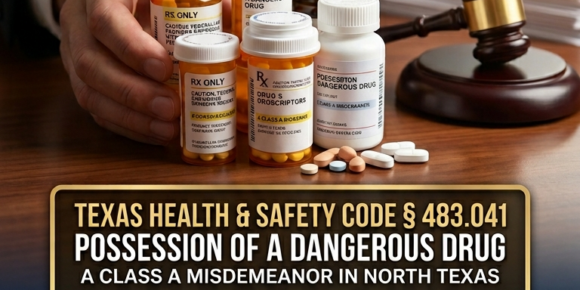
While the name sounds intimidating, a “dangerous drug” is essentially any prescription medication or medical device that is unsafe for self-medication and is not listed in the standard Penalty Groups of the Texas Controlled Substances Act. This includes drugs labeled with “Caution: Federal law prohibits dispensing without a prescription” or “Rx Only.”
At Beltz Law Group, we understand that a simple mistake—like carrying a friend’s prescription or having an old bottle that isn’t yours—can lead to serious criminal allegations.
The Legal Framework: Texas Health and Safety Code § 483.041
Under Texas law, it is illegal to possess a dangerous drug unless you obtained it directly from a pharmacist or a practitioner (like a doctor) with a valid prescription. The law creates two primary offenses:
-
Simple Possession: Merely having the drug in your care, custody, or control.
-
Possession with Intent to Sell: Having the drug specifically for the purpose of selling it.
Note: Both offenses are currently classified under the same penalty range.
Penalties and Consequences
Don’t let the “misdemeanor” label fool you. A conviction under Section 483.041(d) carries heavy penalties that can derail your career and personal life.
| Offense Level | Potential Fine | Potential Jail Time |
| Class A Misdemeanor | Up to $4,000 | Up to 1 Year in County Jail |
| With Prior Conviction | Up to $4,000 | 90 Days to 1 Year in Jail |
Beyond the immediate fines and jail time, a permanent criminal record can lead to:
-
Loss of professional licenses (Nursing, CDL, Teaching).
-
Difficulty securing housing or employment.
-
Impacts on your right to possess a firearm.
Why the Right Defense Matters

Criminal Defense Lawyer North Texas
The law provides specific exemptions for individuals like healthcare workers, pharmacists, and manufacturers acting within their professional duties. However, for the average citizen, the burden often falls on the defense to show that the possession was lawful or that the evidence was obtained through an illegal search and seizure.
As the courts noted in Ex parte Jarreau, the law is designed so that an “ordinary person” should understand these substances are prohibited without medical guidance. However, the line between a controlled substance and a dangerous drug can be thin, and prosecutors must be held to a high standard of proof regarding the exact nature of the substance found.
How Beltz Law Group Can Help
Navigating the North Texas court systems—whether in Dallas, Collin, or Tarrant County—requires a strategic approach. We analyze every detail of your case, from the legality of the initial police stop to the laboratory results of the alleged “dangerous drug.”
We are committed to protecting your rights and fighting for a dismissal, reduction of charges, or alternative sentencing options like deferred adjudication to keep your record clean.